
Forex CRM Security and Integrations: Questions to Ask Before You Buy
Security answers are easy to give and hard to check. A good buyer asks specific questions and notices vagueness. This list helps you interrogate a Forex CRM vendor before client data and money flows through their system.
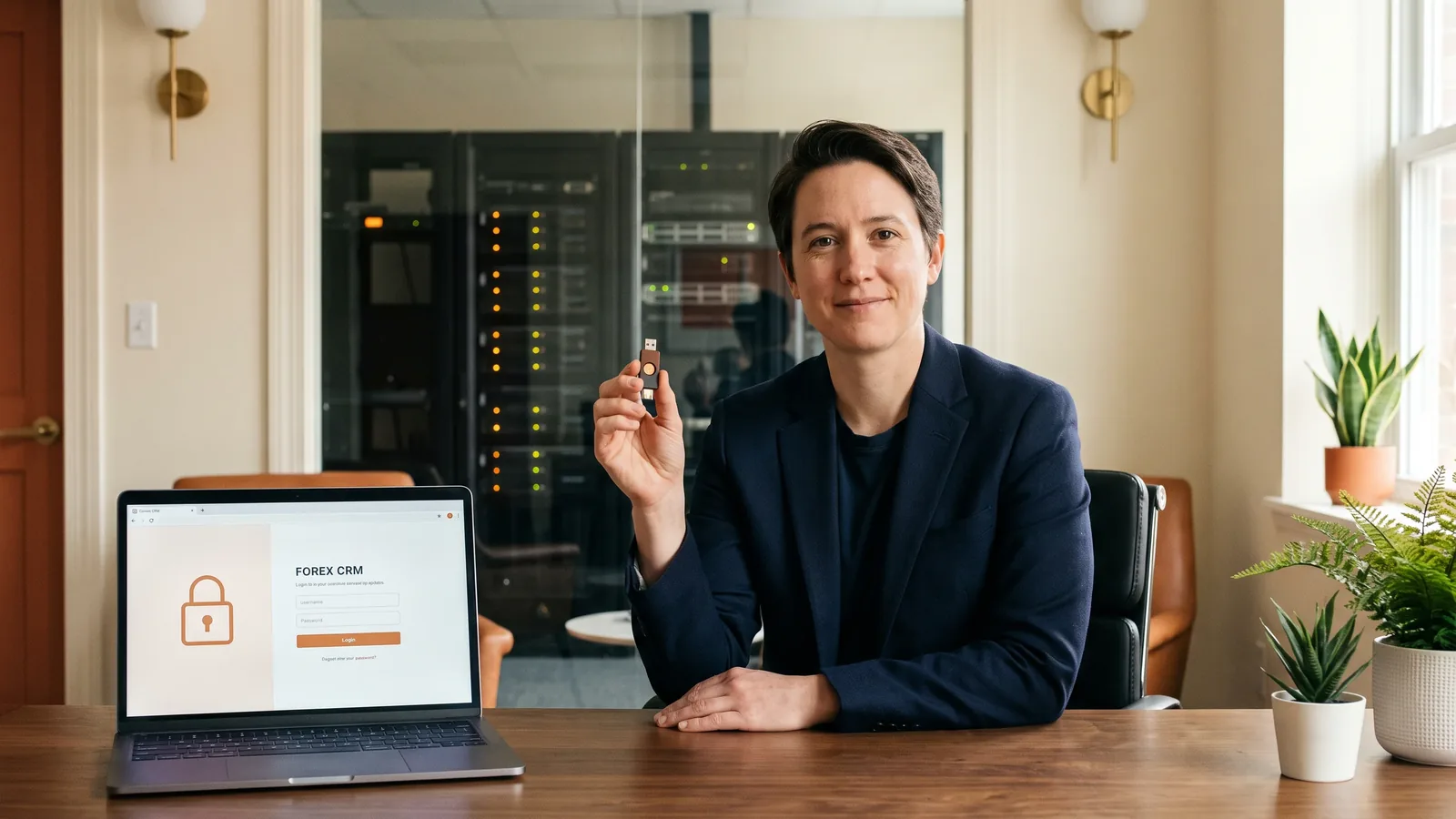
Access control
- Can we set roles and permissions by function?
- Is strong authentication available and enforced?
- Do sensitive actions need a second approver?
- Can we see a log of who did what?
If permissions are all-or-nothing, expect problems as your team grows.
Data handling
- Where is our data stored, and who can access it?
- How is it encrypted in transit and at rest?
- How long is it kept, and can we export or delete it?
Get answers in writing. Your privacy duties do not move to the vendor.
Integration security
Ask how credentials for the trading server and payment providers are stored and rotated, how callbacks are verified and how duplicate messages are handled. Background is in our Manager API guide.
Resilience and incidents
- What are the backup and restore arrangements, and when were they last tested?
- What is the incident response process and notification time?
- What are the support hours?
Red flags
Be wary of vague answers such as “bank-grade security”, a refusal to describe hosting, no audit logs and no export route. Add these questions to the checklist in the Forex CRM buyer’s guide.
Ask for evidence, not adjectives
Replace “secure” and “bank-grade” with requests for evidence: a description of access controls, a sample audit log, backup and restore results and the incident process.
If the vendor will not share these, ask what they can share and weigh that in the score. Security that cannot be described usually cannot be verified either.
A security question table for vendors
Ask each vendor to answer the same questions in writing.
| Question | Vendor A | Vendor B |
|---|---|---|
| How are roles and permissions defined? | ||
| Is multi-factor login available? | ||
| How are integration keys stored and rotated? | ||
| What is logged and for how long? | ||
| How often are backups tested? | ||
| Where is data hosted? | ||
| What is the incident notification process? |
Answers with specifics are better than answers with adjectives.
A worked example of asking for evidence
A buyer asks a vendor to describe its security. The vendor replies with a paragraph of assurances. The buyer asks for something concrete: an access review report, a sample audit log, the date of the last backup test. The vendor provides a log extract and a test record.
The buyer now has evidence, not adjectives. A vendor who struggles to provide any may not have the controls it claims.
Red flags
- Refusal to describe how credentials are stored.
- No audit log of administrator actions.
- Shared logins.
- Vague answers about data location.
- No incident process.
Any of these is a reason to pause and ask more. See our CRM buyer’s guide for other questions.
Price security as part of the whole
Security features can be priced as extras, for example advanced logging or dedicated environments. Ask which are included and what the upgrade costs. A cheaper plan with weaker controls may cost more if an incident occurs.
Contract clauses on security
Ask for security clauses in the contract: obligations to notify you of incidents, to maintain certain controls, to allow reasonable audits and to return or delete your data at the end. A vendor that resists any commitments may not have the controls it claims.
If you are subject to regulation, check what your regulator expects of outsourced systems and whether the vendor can support it.
Your own part
Even the best vendor cannot protect you from weak passwords, shared logins and careless handling of documents. Set your own policies, train your staff and review access regularly. Security is a shared responsibility and your share is large.
Costs of getting security wrong
An incident can cost you clients, reputation and money. Compare vendors partly on security because the cost of failure is high. A modest premium for a vendor with stronger controls and clearer evidence is often a good investment.
How to compare vendors on security without being an expert
You do not need to be a security specialist to ask good questions. Ask each vendor to describe in plain language how access is controlled, how data is protected, how incidents are handled and what evidence they can show. Compare the answers for clarity, specifics and consistency. A vendor who explains well probably understands its own system.
If you have an adviser or an IT colleague, ask them to read the answers. They will often spot gaps you would miss.
Planning your own routine
Decide who in your team is responsible for security, how often access is reviewed and how incidents are reported. Write a one-page routine and attach it to the vendor’s documentation. When the vendor and your routine fit together, you have a workable arrangement.
What to do if a vendor falls short
If a vendor’s answers on security are weak, you have options: ask for improvements with dates, request additional contractual commitments, add controls on your side such as stricter access, or choose another vendor. Do not accept vague reassurance.
Record the decision and the reasons. If you accept a risk, make it a conscious choice with an owner and a review date.
Frequently asked questions
What security should I expect from a CRM vendor?
Role-based access, strong authentication, audit logs, encryption where available, backups and an incident process.
How do I check a vendor’s claims?
Ask for evidence such as logs, test records and policies.
Who is responsible for security?
Both of you. The vendor secures the service, and you secure your accounts, keys and processes.
Is hosting location important?
It can be, for regulation and risk. Ask where data is stored and who can access it.