
MT5 Grey Label Explained for Buyers: What the Listing Means in Plain English
If grey label terminology confuses you, you are not alone. This is a plain-English guide to what an MT5 grey label listing means and what to confirm before you buy.
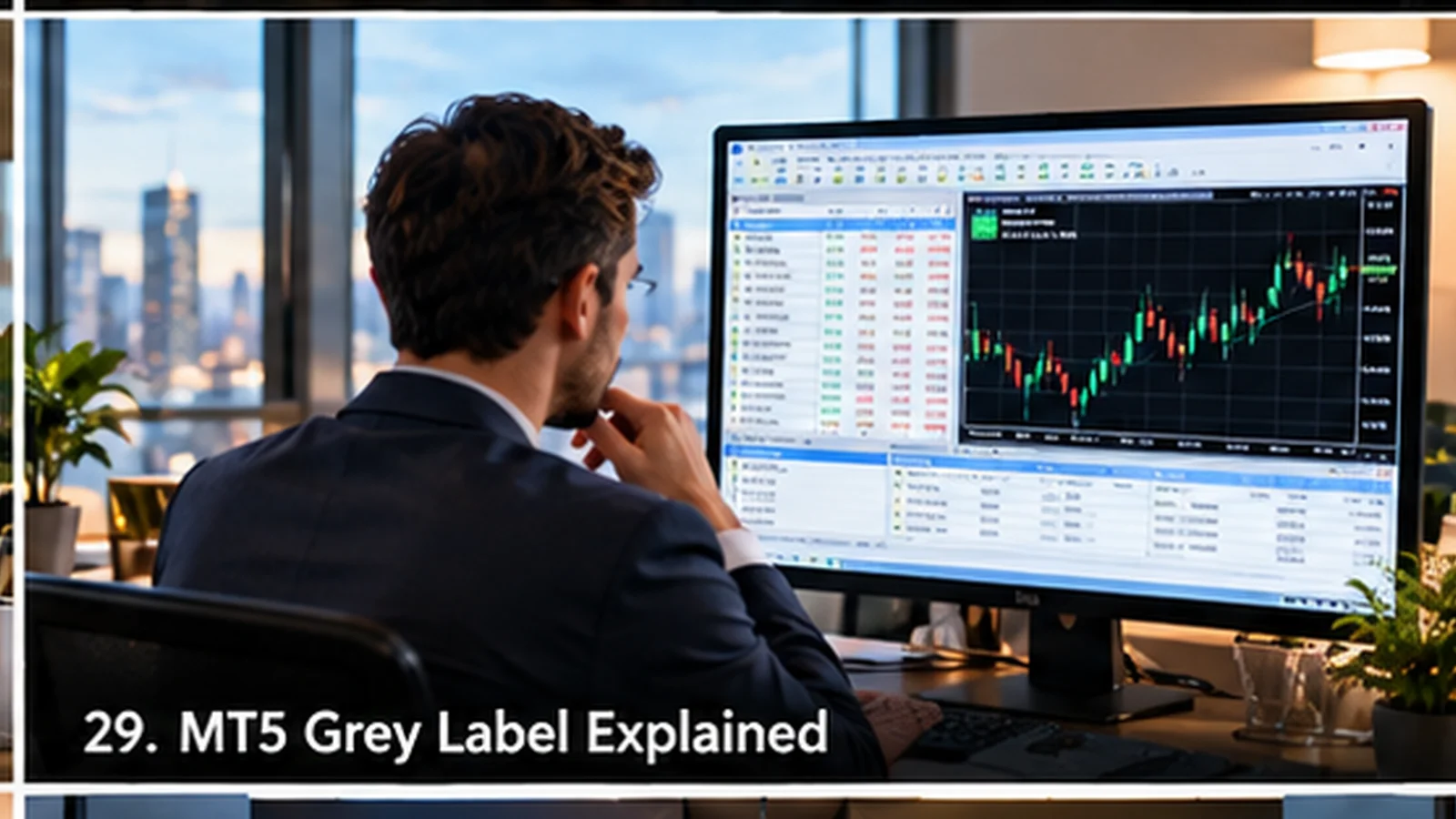
What you are buying
You are buying access to operate a branded MetaTrader 5 environment through a provider arrangement, within listed limits. You are not buying a licence, a client base or a regulatory permission. See our grey label page.
Reading a listing
Price is the monthly setup figure. Jurisdiction and market describe the entity and audience the setup was prepared for. Capacity is a client limit, and a larger Demo group is not live capacity. Compare listings in our setup guide.
What it costs
The grey label setups we list run from $2,000 to $2,400 per month, subject to confirmation. Add optional extras and your own running costs. See the cost guide.
What to confirm before you buy
- Who you contract with.
- Included groups, logins and symbols.
- Support hours.
- What branding appears in the terminal.
- Exit and migration terms.
Next steps
Shortlist two setups and ask for the answers above in writing. Then follow the buyer’s walkthrough.
Five questions to send today
- Who is the contracting entity?
- What are the client, group and login limits?
- Which branding appears in the terminal?
- Which items are optional and priced separately?
- How do I leave, and what happens to my clients?
Send them to two sellers and compare the replies.
A buyer’s one-page summary
Keep a summary of the offer you are considering.
| Item | Answer |
|---|---|
| Provider | |
| Monthly price | |
| Setup fee | |
| Client, group and login limits | |
| Branding included | |
| CRM or API | |
| Support hours | |
| Minimum term | |
| Exit terms |
If you cannot fill a row from the written offer, ask.
A worked example of the first call
A buyer sends five questions before the first call: what is included, what are the limits, what branding is possible, how is support handled and how do I leave. The vendor’s written replies arrive before the call, and the call is spent on clarifying details rather than on a sales pitch.
Buyers who send questions first get better calls and cleaner records.
Where to go next
Use the quote comparison guide to compare offers, the budget worksheet to plan costs and the current setups to shortlist.
What the listing prices cover
Listings on this site show monthly prices from $2,000 to $2,500, with grey label setups from $2,000 to $2,400. These prices are starting points subject to confirmation. They do not include your company, payments, liquidity, marketing or staff, and they may exclude integrations you need.
Treat a listing as the first row of your budget, not the whole sheet.
The questions behind the price
Behind every price is a set of assumptions: a number of clients, a number of groups, a level of support, a set of integrations. Ask what those assumptions are. If your plan differs, ask what the price becomes.
A vendor who can answer "what would the price be if I needed twice the clients?" has a clear model. A vendor who cannot may be improvising.
When to move from reading to asking
Reading helps you form questions, but at some point you must ask. Once you have a budget sheet, a scope sheet and a list of questions, contact two or three vendors. Send them the same package and compare the replies. Do this within a week or two, while your understanding is fresh.
What the first week of shopping should produce
By the end of your first week of looking at grey label offers you should have four documents: a one-page description of the brokerage you plan to run, a budget sheet with blanks for each quote, a scope sheet listing what you expect a provider to deliver and a short list of two or three providers with their written answers to the same questions. If you finish the week with only brochures and a vague impression, you have not yet started shopping, you have been browsing.
The point of producing documents early is that they hold your decisions still. Providers will change their wording, add options and offer discounts. Without your own documents, it is easy to be pulled towards whichever pitch was most recent. With them, you can ask each provider to respond to your structure and you can see at a glance where the offers differ.
Signs that an offer is built for buyers like you
A good offer for a first-time buyer is easy to read. It states what is included in plain language, lists the limits with numbers, explains how to leave and tells you what is optional and what each option costs. It does not rely on adjectives such as "flexible" or "complete" to do the work of a clause. It also welcomes questions, and the answers come in writing within a reasonable time.
Be cautious of offers that are hard to understand on purpose. If you need a call to find out what the price includes, or if the provider changes the answer depending on who asks, you may be looking at an offer that depends on confusion. Simpler offers are not always better, but offers that cannot be explained simply deserve extra caution.
What to do if the offers disagree
Sometimes two providers give conflicting answers to the same question, such as whether a feature is included. When that happens, ask each to confirm in writing and, if necessary, to explain the difference. Sometimes the cause is a different understanding of terms. Sometimes it is a difference in the offer.
Writing forces clarity. If a provider will not put an answer in writing, treat the answer as uncertain and decide whether you can live with the risk.
Frequently asked questions
What am I buying with a grey label?
A branded way to operate on a provider’s MT5 environment within limits, with support defined in your agreement.
What should I ask first?
What is included, what are the limits, what branding is possible, how is support handled and how do I leave.
Is the price final?
Listed prices are starting points subject to confirmation.
Do I still need a licence?
Your business may need authorisation regardless of the platform. Take advice.