
MT4 vs MT5 White Label: A Buyer’s Comparison Table and Decision Rules
The platform choice shapes your costs, your tools and your growth path. This comparison gives buyers a table to fill in and simple rules for choosing.
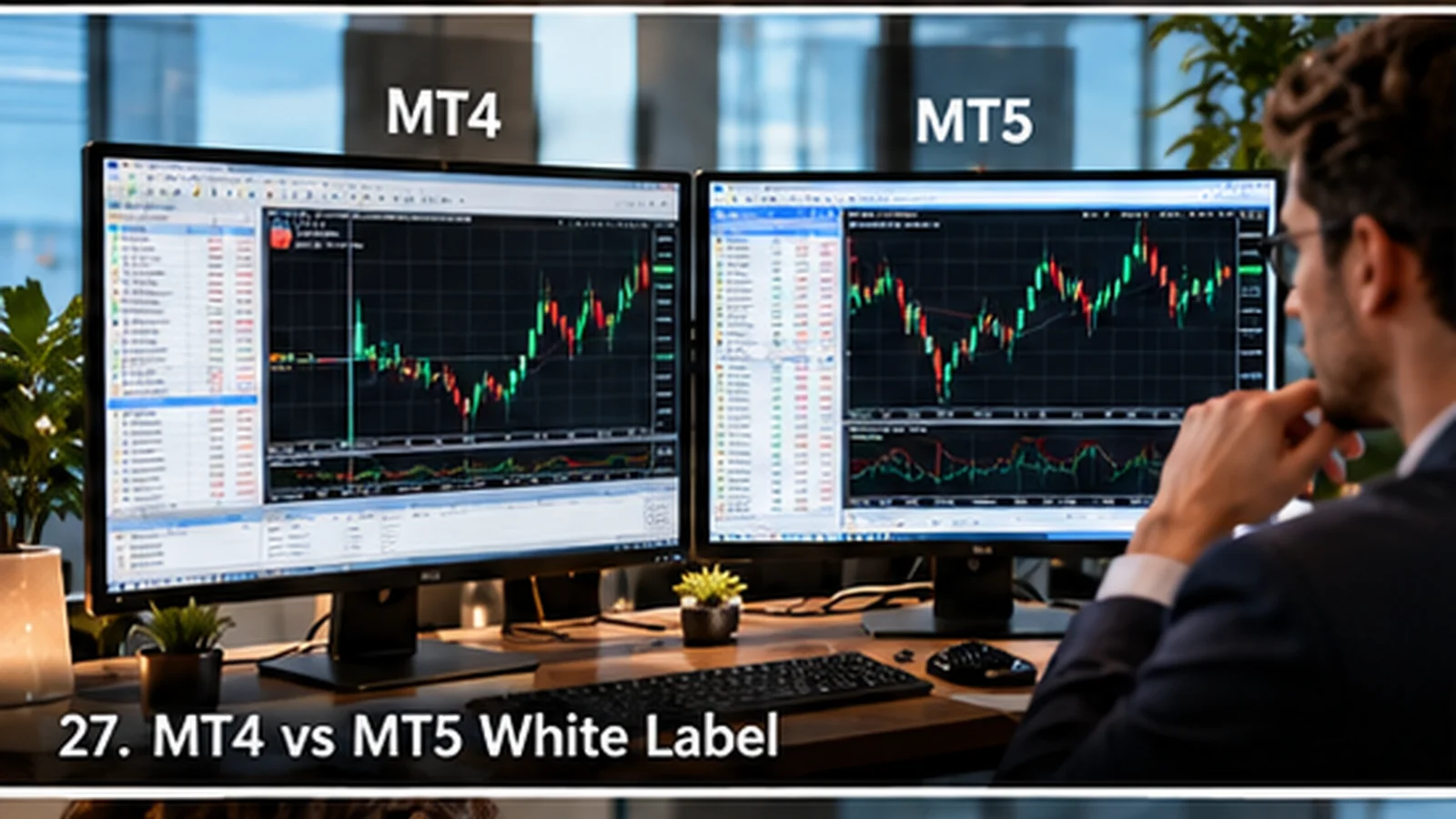
A comparison table to fill in
Make rows for audience preference, instruments needed, expert advisor needs, CRM support, bridge support, plugin support, price quotes and provider roadmap. Fill both columns from written answers.
Audience and tools
If your clients rely on MQL4 expert advisors, MT4 reduces friction. If you are building a new audience, MT5 offers more and will be easier to grow into. Ask each vendor what they support.
Instruments and account modes
MT5 supports more asset classes and offers hedging and netting account modes. If you plan to offer more than forex and CFDs, price an MT5 route. See MT5 and CRM.
Integration support
Confirm that your CRM, bridge and payment vendors support the chosen platform and its management interfaces, covered in our Manager API guide.
Decision rules
Choose MT4 if audience and tools depend on it and your provider can support it. Choose MT5 if you want range and a longer runway. Compare options on MT4 white label and MT5 white label turnkey.
Run a small client survey
Ask twenty prospective clients which platform they use and which tools they rely on. Even a short survey changes the discussion from opinion to evidence.
Add the answers to your comparison table. If most prefer one platform, that should weigh heavily in your scoring.
A table to fill in before you decide
| Row | MT4 | MT5 | Why it matters to us |
|---|---|---|---|
| Client familiarity | |||
| Tools and EAs we need | |||
| Instruments we plan to offer | |||
| Account modes we need | |||
| CRM and bridge support | |||
| Quote for the same scope | |||
| Provider support horizon |
Fill the last column in your own words. If you cannot say why a row matters, drop it.
A worked example of a small client survey
A buyer asks thirty existing or likely clients two questions: which platform they use now and which tools they rely on. Most use MT4 with a small set of expert advisors; a minority want newer features. The buyer weights audience habits highest and chooses accordingly, while planning to offer MT5 later.
A short survey costs little and gives data that no comparison table can.
Decision rules
Write rules before you look at prices: for instance, "if more than half of target clients depend on MT4 tools, choose MT4 unless the provider cannot support it for three years". Rules written in advance prevent the decision from being bent by a discount. See our MT4 grey label guide.
Costs buyers forget when switching platforms
Platform choice affects more than the licence. It affects client training, support scripts, marketing materials, risk tools, reporting formats and integrations. A switch means updating all of them. Add a line to your budget for each.
Ask the vendor whether their support teams are equally experienced on both platforms. A vendor that is stronger on one may give you better service on that one.
A comparison of vendor support
Ask each vendor how many clients they run on each platform, how long they have supported each and how they communicate about platform news. A vendor with deep experience in one platform may be a safer choice for that platform.
If you plan to offer both eventually, ask how the vendor handles dual platforms and whether the price is additive.
Timing the decision
You do not need to choose the final platform on day one. If your plan is uncertain, choose the platform that allows the easiest change later, and set a review date. Record the decision, the reasons and the review date in your decision file.
Putting numbers on audience preference
Audience preference is often asserted but rarely measured. A short survey or a handful of interviews can give you real numbers: how many of your likely clients use MT4, how many use MT5, which tools they rely on and what would make them switch. Even twenty or thirty responses are more reliable than a guess.
Ask also how clients would feel about learning a new platform. A group that is loyal to MT4 may accept MT5 if you help them move their tools, while another group may leave. The answer shapes both your platform choice and your launch plan.
What to ask the provider about each platform
For each platform, ask the provider how long it has supported it, how many brokers it runs on it, what the typical issues are and what its plans are for the next two years. Ask about the CRM and bridge support available and whether any features you need are missing.
Compare answers on a single page. If the provider is clearly stronger on one platform, weigh that in your decision. A strong provider on a slightly less ideal platform may serve you better than a weak provider on the ideal one.
Writing the decision down
When you choose between MT4 and MT5, write down the decision, the reasons, the alternatives, the assumptions about your audience and the date when you will review it. Include the quotes you compared and the results of any survey. Share the note with your team and your provider.
A written decision helps you stay consistent and tells you what to check when conditions change, for instance when your provider announces a roadmap or when your clients start asking for different tools.
Frequently asked questions
Which platform should I buy?
The one your target clients use and your provider supports, at a price you accept.
How do I check client preferences?
Run a short survey or interview a few likely clients.
Can I offer both platforms?
Possibly, at a higher operating cost. Ask for the price.
Are decision rules useful?
Yes. They keep the choice consistent with your plan.