
What Is Forex Grey Label and How Does It Work? A Buyer’s Primer
Before comparing prices, understand the structure you are buying into. This primer explains the parties, the money flow and the checks that protect a buyer.
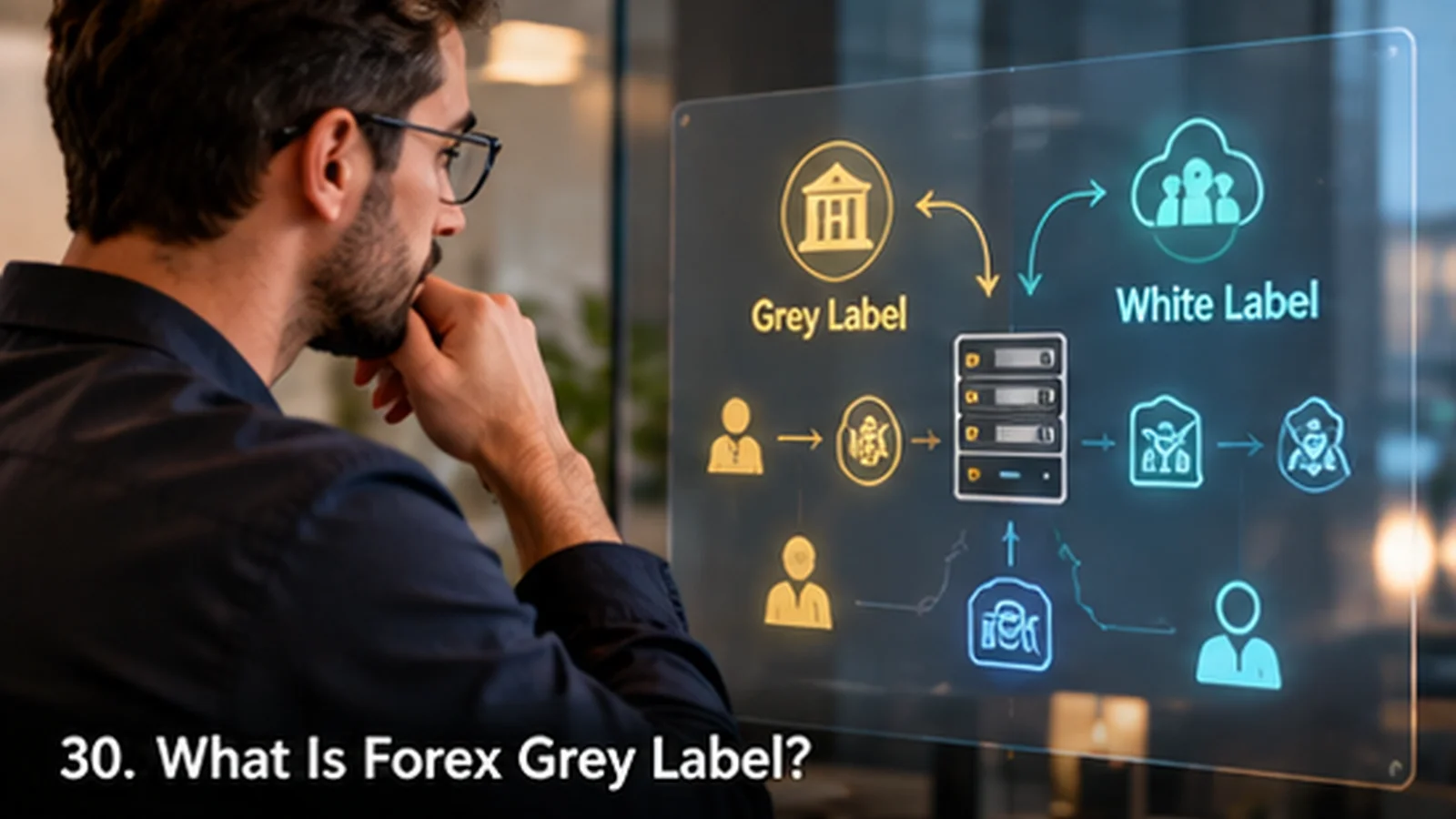
The parties
The platform vendor makes the trading software. A provider holds the relationship and offers grey label arrangements. You, the broker, run the brand and clients. Liquidity, payments and CRM add further parties.
How money flows
Clients fund accounts through your payment providers. You earn from the conditions you set within your groups and pay the provider for the setup. How orders are handled is your decision and subject to regulation. See our short definition.
What you should check
Check the contracting entity, the written scope, the limits, the support terms and your exit rights. A grey label is not a licence; your regulatory duties depend on your markets. See our jurisdiction overview.
Gray or grey?
The two spellings mean the same thing. Compare scope, not spelling.
Where to go next
Compare it with a white label in our model comparison.
A one-page summary to keep
Write the structure on one page: the platform vendor, the provider, you and your clients, plus the third parties you will need. Draw arrows for data and for money.
Keep it with your purchase file. When a seller proposes something unusual, check it against the diagram and ask who is responsible.
Who gets paid for what
Understanding the money flow helps you read a quote.
| Party | Receives money for | Typically paid by |
|---|---|---|
| Platform provider | Environment and updates | You, monthly |
| CRM vendor | Back office licence and integration | You |
| Payment provider | Processing | You or your clients |
| Liquidity provider | Pricing and execution | Through trading activity or fees |
| Advisers | Formation and compliance | You |
A quote that bundles several of these should say which parts it covers.
A worked example of reading a quote
A quote lists a single monthly price for "grey label service". The buyer asks which of the rows above are included. The vendor explains that the platform and the CRM licence are included, while payments and liquidity are separate. With that answer the buyer builds a budget that includes the missing rows.
Most misunderstandings about cost are really misunderstandings about who is paid for what.
Gray or grey?
Both spellings are common and refer to the same kind of arrangement. Focus on scope, limits and terms. See our model comparison.
The questions a first-time buyer should ask
A first-time buyer may not know what to ask, so a short list helps: What exactly am I buying? What are the limits? What is not included? Who supports my clients and who supports me? What happens if I want to leave? Can I see the contract before I pay?
Send these questions in writing to every provider. The answers will tell you not only about the product but about how each provider communicates, which is often a good predictor of how they behave as a partner.
Costs that sit outside the grey label
A grey label covers a part of the brokerage. Other costs include your company and any authorisation, banking, payment providers, liquidity, marketing, staff and professional advice. A buyer who budgets only for the grey label fee will be short of cash soon.
List the costs outside the offer and estimate them. Doing so also helps you judge whether the offer is priced fairly for what it covers.
A one-page summary to keep
After your research, write a single page: what you are buying, what it costs, what is excluded, what the limits are, how support works and how to leave. Share it with your co-founders and advisers. It is the document that keeps everyone aligned when new information arrives.
A buyer’s walk through the structure
Picture the structure from the buyer’s chair. At the bottom is the platform environment run by the provider. Above it are the configurations you choose: account types, groups, symbols and rules. Above those sit your own systems: website, portal, CRM and payments. At the top is your brand, which is what clients see. Each layer has a different owner and a different cost.
When you read a quote, mark which layer each line belongs to. Lines in the lower layers are the provider’s responsibility. Lines in the upper layers are yours, even if the provider offers help. Many misunderstandings come from assuming that a line in your layer is the provider’s job, or the other way round.
Why the exit matters more than it seems
Buyers focus on the start, but the structure also determines how easy it is to leave. If your branding, client records and integrations are tied tightly to one provider, moving is expensive. If they are portable, moving is manageable. Ask how each layer could be moved and by whom.
A provider that makes leaving easy is usually confident that you will stay for good reasons. A provider that makes leaving hard may be relying on lock-in. You do not need to plan to leave, but you should know the cost if you ever had to.
Preparing to talk to a provider
Before you speak to a provider, write a short list: what you want to offer, who you want to serve, how many clients you expect, what you need from the provider and what you can supply yourself. Then prepare questions about price, limits, support and exit.
A prepared conversation gives better answers and helps you spot gaps quickly. Take notes, send a summary email and ask the provider to confirm the key points in writing.
Frequently asked questions
What does a grey label include?
It depends on the offer. Ask for a written list.
Who do I pay?
Usually the platform provider, plus other vendors for CRM, payments and liquidity.
Is gray the same as grey?
In general usage, yes. Compare scope, not spelling.
What should I check before buying?
Scope, limits, support, branding and exit terms.