
Copy Trading Risk Controls: A Buyer’s Checklist for Brokers
Copy trading tools are sold on features such as leaderboards and one-click following. Buyers should ask a different question: what stops one bad trader from hurting hundreds of followers? This checklist lists the risk controls to demand before you buy.
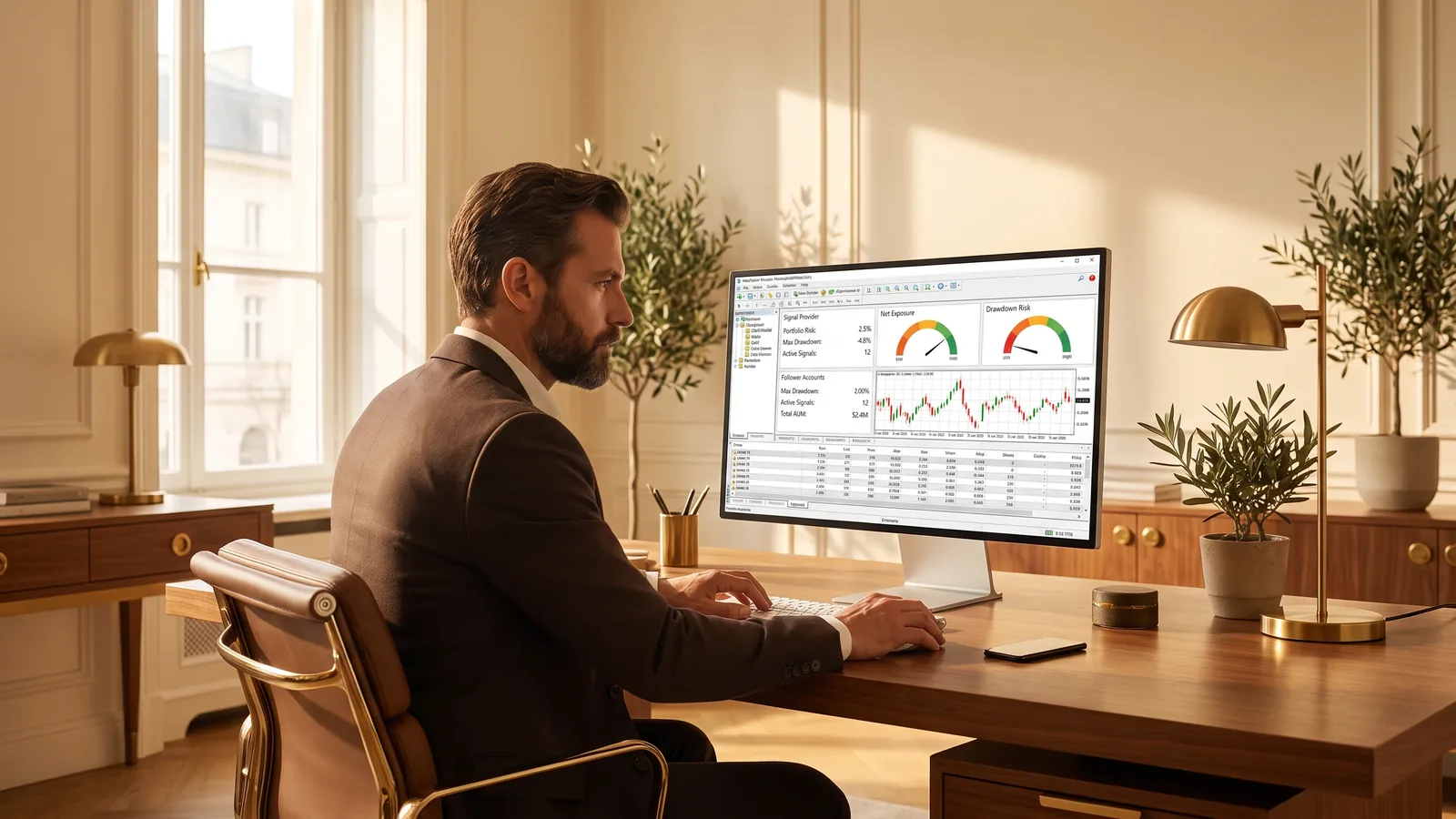
Controls to demand from any copy trading product
- A maximum lot size and exposure cap per follower.
- A drawdown or equity stop that pauses copying.
- Limits on slippage and execution delay, with a defined action when exceeded.
- Provider limits and the ability to pause or remove a provider quickly.
- Reports showing what was copied, at what price and when.
If a vendor cannot show these in a demo, treat the product as unfinished.
Ask how providers are vetted
Check whether the product helps you verify providers, show statistics honestly and flag unusual behaviour such as sudden leverage jumps. Vetting is your responsibility, but good tooling makes it practical. The configuration side is in our setup guide.
Fees and incentives
Ask how performance fees are calculated and paid. Fee designs that reward short-term risk-taking can hurt followers. Prefer products that support high-water marks and clear calculation periods, and make sure fees appear in client statements.
Disclosure and records
The product should let you show risk warnings in the sign-up flow and keep a record of what each follower accepted. Ask how long records are kept and whether you can export them.
Price the protection
Ask whether risk controls are included or priced as add-ons, and what monitoring effort your team will need. Take legal advice on whether copy trading counts as a regulated activity where you operate, then compare models in copy trading versus PAMM/MAM.
How to test the controls in a demo
Ask the vendor to show a follower hitting the drawdown stop, a provider trade rejected for size and a delayed copy exceeding the slippage limit. Watch what the system does and what the follower sees.
If the vendor can only describe the controls, you cannot be sure they work. A short live test is worth more than a long feature list.
A control demand list
When you evaluate a copy trading product, demand a list of controls and ask for evidence of each.
| Control | Present | Evidence seen | Notes |
|---|---|---|---|
| Exposure limits per provider | |||
| Drawdown pause for followers | |||
| Provider vetting workflow | |||
| Execution delay monitoring | |||
| Fee transparency | |||
| Disclosure templates | |||
| Audit trail of changes |
A control that cannot be demonstrated should be treated as missing.
A worked example of a demo test
A buyer asks the vendor to demonstrate a drawdown pause. The vendor sets a threshold, simulates a provider loss and shows followers being paused. The buyer then asks to see what the follower sees and what the broker’s dashboard shows. One of the screens lacks a clear message, so the buyer notes it as a gap and asks for a fix before purchase.
Testing the controls in a demo takes an hour and often reveals gaps that brochures never mention.
Pricing the protection
Controls cost money, either in the product price or in your team’s time to monitor them. Ask which controls are included, which are extras and which need manual work. Add the cost to your budget. A product that looks cheap but requires constant manual checking may cost more overall.
Disclosure and records
Ask what disclosure templates the vendor provides and whether they are adaptable to your jurisdiction. Ask how records are kept: provider changes, rule changes, fee calculations and follower actions. Good records protect you in a dispute and satisfy regulators and partners who ask questions.
The cost of getting risk wrong
Risk failures in copy trading are public. A provider’s bad week affects many followers at once, and unhappy followers talk. The cost is not only the loss itself but the damage to your reputation and the support and legal work that follows.
When you compare products, weigh the cost of controls against the cost of an incident. A product that costs a little more but prevents a single serious incident may be cheaper overall.
Questions about the vendor’s own record
Ask the vendor how many brokers use the product, how long they have run it and how incidents have been handled. Ask for an example of a control that prevented a problem and of one that failed and was improved. Vendors with real experience have such stories and will tell them honestly.
Be cautious of a vendor who claims no problem has ever occurred. Copy trading is complex and problems happen. What matters is how they are caught and fixed.
Training your team to use the controls
Buying controls is not enough; your team must know how to use them. Ask for training sessions and written procedures. Run a rehearsal with a simulated provider loss and see whether staff respond as planned. Make sure at least two people can operate each control, so that holidays and illness do not leave you exposed.
Asking about incident history
When you evaluate a product, ask how the vendor’s customers have used its controls in real events. Ask for anonymised examples: a provider who breached limits, a fast market that caused slippage, a follower who complained about fees. Ask what the system did and what the broker did.
Real examples show how the product behaves under pressure and how the vendor learns from it. A vendor that can only describe features in the abstract has less to teach you.
Planning a review of controls
Schedule a review of controls every quarter. Look at the number of limit breaches, pauses, complaints and unusual events. Ask whether the limits are right and whether the process worked. Update the rules and tell followers about important changes.
A living control framework is more protective than a static one.
Frequently asked questions
What controls should a copy trading product have?
Exposure limits, drawdown pauses, provider vetting, delay monitoring, fee transparency and records.
How do I test the controls?
Ask for a demonstration with your scenarios, including a simulated loss and a paused follower.
Who is responsible for vetting providers?
You are, as the broker, though the product may help. Define the criteria and the process.
Are disclosure templates enough?
They are a start. Review them with an adviser for your jurisdiction.